Overview of NG-SOS services
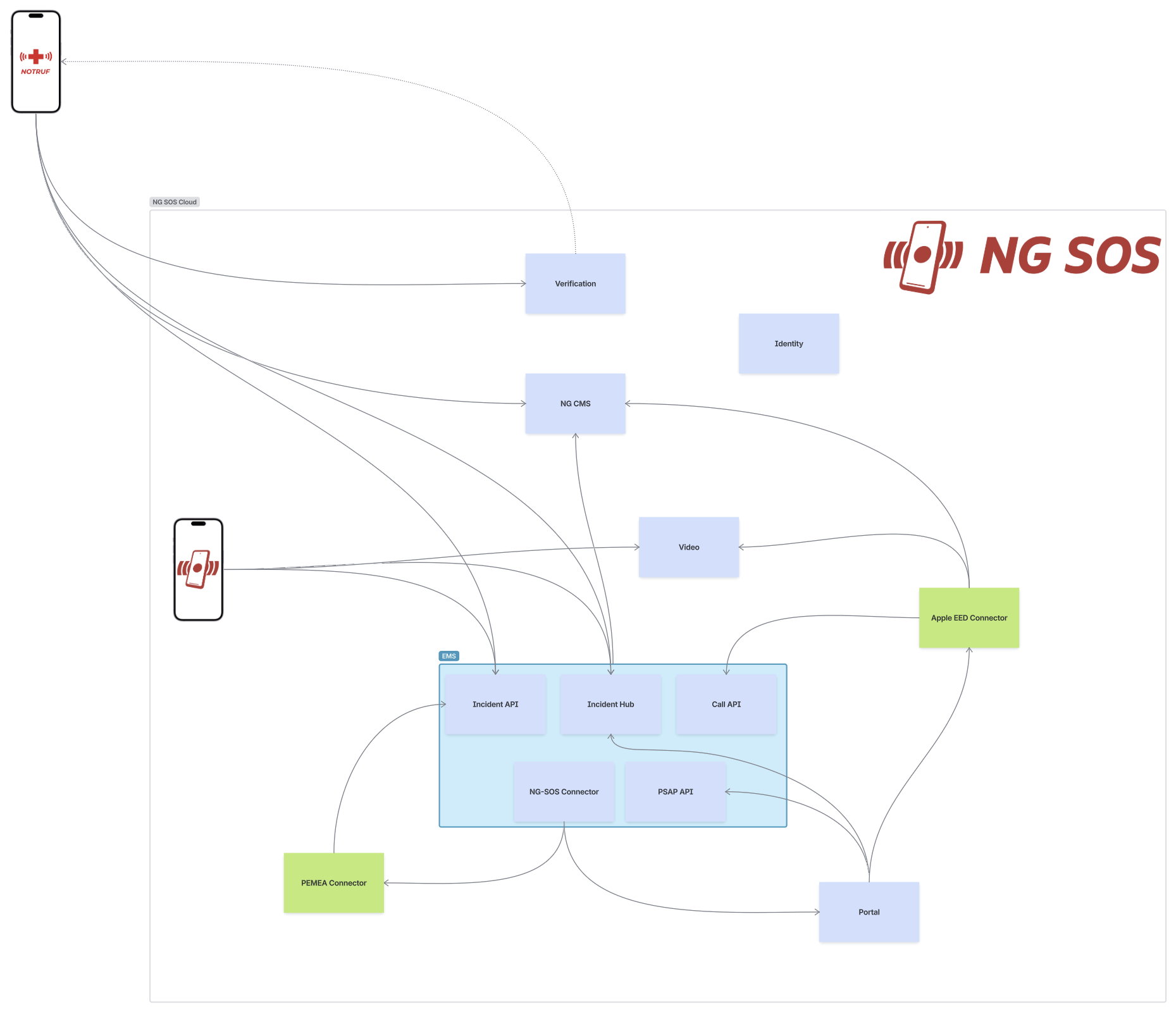
NG-SOS consists of several separate .NET (ASP.NET Core) applications. All of them are run as Azure Container apps. Azure Container apps ensure high availability and throughput. Data is stored in Azure Cosmos db and Azure blob storage. Applications communicate with each other using an internal API secured by OAuth 2.0. The SignalR Incident HUB service ensures fast dissemination of information within the system.
EMS - Emergency message server
The main backend server is responsible for all incident handling and connections to external systems. All incident data is stored in its database. It hosts the NG-SOS API that partner systems call, and NG-SOS Publisher, which delivers incidents outbound through NG-SOS Connector.
Video server
Provides video transmission with the caller and video call recordings.
Portal
UI application for dispatchers. It shows the data reported by the caller’s emergency application, locates the caller, and starts a chat or video call. It also shares an incident with other agencies or units on call. Technically it is a React application — a web build and a React Native mobile build — talking directly to the EMS server.
WebApp
An application for callers who do not have an emergency mobile application installed. It allows caller location, chat, and video. It also contains interactive first aid instructions.